
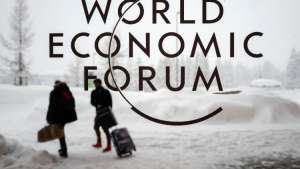
 Pubblichiamo di seguito il Messaggio che il Santo Padre Francesco ha inviato al Prof. Klaus Schwab, Presidente Esecutivo del World Economic Forum, che ha luogo a Davos-Klosters (Svizzera) dal 23 al 26 gennaio 2018 sul tema: “Creating a Shared Future in a Fractured World”:
Messaggio del Santo Padre
To Professor Klaus Schwab
Executive Chairman of the World Economic Forum
I am grateful for your invitation to participate in the World Economic Forum 2018 and for your desire to include the perspective of the Catholic Church and the Holy See at the meeting in Davos. I thank you also for your efforts to bring this perspective to the attention of those gathered for this annual Forum, including the distinguished political and governmental authorities present and all those engaged in the fields of business, the economy, work and culture, as they discuss the challenges, concerns, hopes and prospects of the world today and of the future.
The theme chosen for this year’s Forum – Creating a Shared Future in a Fractured World – is very timely. I trust that it will assist in guiding your deliberations as you seek better foundations for building inclusive, just and supportive societies, capable of restoring dignity to those who live with great uncertainty and who are unable to dream of a better world.
At the level of global governance, we are increasingly aware that there is a growing fragmentation between States and Institutions. New actors are emerging, as well as new economic competition and regional trade agreements. Even the most recent technologies are transforming economic models and the globalized world itself, which, conditioned by private interests and an ambition for profit at all costs, seem to favour further fragmentation and individualism, rather than to facilitate approaches that are more inclusive.
The recurring financial instabilities have brought new problems and serious challenges that governments must confront, such as the growth of unemployment, the increase in various forms of poverty, the widening of the socio-economic gap and new forms of slavery, often rooted in situations of conflict, migration and various social problems. “Together with this, we encounter certain rather selfish lifestyles, marked by an opulence which is no longer sustainable and frequently indifferent to the world around us, and especially to the poorest of the poor. To our dismay we see technical and economic questions dominating political debate, to the detriment of genuine concern for human beings. Men and women risk being reduced to mere cogs in a machine that treats them as items of consumption to be exploited, with the result that – as is so tragically apparent – whenever a human life no longer proves useful for that machine, it is discarded with few qualms” (Address to the European Parliament, Strasbourg, 25 November 2014).
In this context, it is vital to safeguard the dignity of the human person, in particular by offering to all people real opportunities for integral human development and by implementing economic policies that favour the family. “Economic freedom must not prevail over the practical freedom of man and over his rights, and the market must not be absolute, but honour the exigencies of justice” (Address to the General Confederation of Italian Industry, 27 February 2016). Economic models, therefore, are also required to observe an ethic of sustainable and integral development, based on values that place the human person and his or her rights at the centre.
“Before the many barriers of injustice, of loneliness, of distrust and of suspicion which are still being elaborated in our day, the world of labour is called upon to take courageous steps in order that ‘being and working together’ is not merely a slogan but a programme for the present and the future” (Ibid.). Only through a firm resolve shared by all economic actors may we hope to give a new direction to the destiny of our world. So too artificial intelligence, robotics and other technological innovations must be so employed that they contribute to the service of humanity and to the protection of our common home, rather than to the contrary, as some assessments unfortunately foresee.
We cannot remain silent in the face of the suffering of millions of people whose dignity is wounded, nor can we continue to move forward as if the spread of poverty and injustice had no cause. It is a moral imperative, a responsibility that involves everyone, to create the right conditions to allow each person to live in a dignified manner. By rejecting a “throwaway” culture and a mentality of indifference, the entrepreneurial world has enormous potential to effect substantial change by increasing the quality of productivity, creating new jobs, respecting labour laws, fighting against public and private corruption and promoting social justice, together with the fair and equitable sharing of profits.
There is a grave responsibility to exercise wise discernment, for the decisions made will be decisive for shaping the world of tomorrow and that of future generations. Thus, if we want a more secure future, one that encourages the prosperity of all, then it is necessary to keep the compass continually oriented towards “true North”, represented by authentic values. Now is the time to take courageous and bold steps for our beloved planet. This is the right moment to put into action our responsibility to contribute to the development of humanity.
I hope, therefore, that this 2018 meeting of the World Economic Forum will allow an open, free, and respectful exchange, and be inspired above all else by the desire to advance the common good.
In renewing my best wishes for the success of the meeting, I willingly invoke upon you and all participating in the Forum the divine blessings of wisdom and strength.
From the Vatican, 12 January 2018
FRANCIS
© http://press.vatican.va/content/salastampa/it/bollettino.html 23 gennaio 2018
Presidente esecutivo del Forum Economico Mondiale
Le sono grato per l’invito a partecipare al Forum Economico Mondiale 2018 e per il suo desiderio di includere, all’incontro di Davos, la prospettiva della Chiesa Cattolica e della Santa Sede. La ringrazio anche dei suoi sforzi per portare questa prospettiva all’attenzione di quanti sono riuniti per questo Forum annuale, comprese le illustri autorità politiche e governative presenti e tutti coloro che sono impegnati nel campo degli affari, dell’economia, del lavoro e della cultura, mentre discutono delle sfide, le preoccupazioni, le speranze e le prospettive del mondo attuale e f u t u ro . Il tema scelto per il Forum di quest’anno — Creare un futuro condiviso in un mondo fratturato — è molto opportuno. Confido che aiuterà a guidare le vostre deliberazioni mentre cercate fondamenta migliori per costruire società inclusive, giuste e solidali, capaci di restituire dignità a quanti vivono in grande incertezza e non riescono a sognare un mondo migliore. A livello di governance globale, siamo sempre più consapevoli che c’è una crescente frammentazione tra Stati e Istituzioni. Stanno emergendo nuovi attori, come anche una nuova competizione economica e accordi commerciali regionali. Anche le tecnologie più recenti stanno trasformando i modelli economici e lo stesso mondo globalizzato che, condizionato da interessi privati e dall’ambizione del profitto a tutti i costi, sembra favorire l’ulteriore frammentazione e l’individualismo invece di facilitare approcci che siano più inclusivi. Le ricorrenti instabilità finanziare hanno portato nuovi problemi e gravi sfide con cui i governi devono confrontarsi, come la crescita della disoccupazione, l’aumento di diverse forme di povertà, l’aumento del divario socio-economico e le nuove forme di schiavitù, spesso radicate in situazioni di conflitto, migrazione e diversi problemi sociali. «A ciò si associano alcuni stili di vita un po’ egoisti, caratterizzati da un’opulenza ormai insostenibile e spesso indifferente nei confronti del mondo circostante, soprattutto dei più poveri. Si constata con rammarico un prevalere delle questioni tecniche ed economiche al centro del dibattito politico, a scapito di un autentico orientamento antropologico. L’essere umano rischia di essere ridotto a semplice ingranaggio di un meccanismo che lo tratta alla stregua di un bene di consumo da utilizzare, così che — lo notiamo purtroppo spesso — quando la vita non è funzionale a tale meccanismo viene scartata senza troppe remore» ( Discorso al Parlamento europeo , Strasburgo, 25 novembre 2014). In tale contesto è essenziale salvaguardare la dignità della persona umana, specialmente offrendo a ognuno opportunità vere di sviluppo umano integrale e attuando politiche economiche che favoriscano la famiglia. La «libertà economica non prevalga sulla concreta libertà dell’uomo e sui suoi diritti, [...] il mercato non sia un assoluto, ma onori le esigenze della giustizia» ( Discorso agli imprenditori riuniti in Confindustria , 27 febbraio 2016). I modelli economici, dunque, devono rispettare un’etica di sviluppo integrale e sostenibile, basata su valori che pongano al centro la persona umana e i suoi diritti. «Dinanzi a tante barriere di ingiustizia, di solitudine, di sfiducia e di sospetto che vengono ancora erette ai nostri giorni, il mondo del lavoro, di cui voi siete attori di primo piano, è chiamato a fare passi coraggiosi perché “trovarsi e fare insieme” non sia solo uno slogan , ma un programma per il presente e il futuro» ( Ibid. ). Solo attraverso una ferma risoluzione, condivisa da tutti gli attori economici, possiamo sperare di dare una nuova direzione al destino del nostro mondo. Così, anche l’intelligenza artificiale, la robotica e altre innovazioni tecnologiche devono essere impiegate in modo da contribuire al servizio dell’umanità e alla protezione della nostra casa comune invece che per l’esatto opposto, come purtroppo prevedono alcune stime. Non possiamo rimanere in silenzio dinanzi alla sofferenza di milioni di persone la cui dignità è ferita, né possiamo continuare ad andare avanti come se la diffusione della povertà e dell’ingiustizia non avesse una causa. Creare le giuste condizioni per consentire a ogni persona di vivere in maniera dignitosa è un imperativo morale, una responsabilità che coinvolge tutti. Rifiutando una cultura dello “scarto” e una mentalità dell’indifferenza, il mondo imprenditoriale ha un potenziale immenso per produrre un cambiamento sostanziale aumentando la qualità della produttività, creando nuovi posti di lavoro, rispettando le leggi sul lavoro, combattendo la corruzione pubblica e privata e promuovendo la giustizia sociale, insieme alla giusta ed equa condivisione dei profitti. C’è una grande responsabilità da esercitare con saggio discernimento, poiché le decisioni prese saranno fondamentali per modellare il mondo di domani e quello delle generazioni future. Pertanto, se vogliamo un futuro più sicuro, un futuro che incoraggi la prosperità di tutti, è necessario mantenere la bussola sempre puntata verso il “v e ro N o rd ”, rappresentato dai valori autentici. È questo il tempo di prendere misure coraggiose e audaci per il nostro amato pianeta. È questo il momento giusto per tradurre in azione la nostra responsabilità di contribuire allo sviluppo dell’umanità. Spero dunque che questo incontro del Forum Economico Mondiale 2018 consenta uno scambio aperto, libero e rispettoso e sia ispirato anzitutto dal desiderio di promuovere il bene comune. Nel rinnovare i miei migliori auguri per il buon esito dell’incontro, invoco volentieri su di lei e su tutti quanti partecipano al Forum le benedizioni divine della saggezza e della forza.
Dal Vaticano, 12 gennaio 2018
FRANCESCO
© Osservatore Romano - 24 gennaio 2018